Search This Blog

Saturday, 25 April 2020

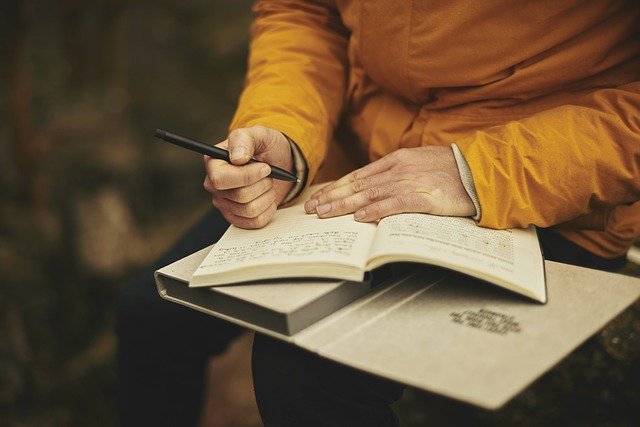
Escaping reality through fiction

arts lockdown


The Arts helping to get through lockdown


If there's one thing that having to stay at home for most of the day every day during the coronavirus pandemic seems to be achieving is a resurgence of popular interest in the arts. While we are all avidly using technology to  substitute our usual habits of socialising, it is the arts that so many of us have turned to. Whether we have tuned in to streaming of music concerts, theatrical performances, the ballet, or virtual tours of museums and galleries, it is the arts that are offering some form of solace, that are helping us to reach inside ourselves as individuals and find ways of both escapism and explanation. 

We need to include literature and writing in this. There has been a surge in book sales across the world as one country after another went into lockdown, with stores reporting a sudden increase in the numbers of sales of physical books while shops remained open. After the lockdown, booksellers that are able to deliver or post books are doing so at a surprisingly high rate, while it is expected that the sale of e-books will also surge. The more intrepid book clubs have set up Zoom meetings so that book lovers can continue their exchanges on their 'book of the month'. Literature is one of the arts that is helping people get through this.


Reading


The joy of reading


Reading, of course, is a great way of keeping the mind active and distracted from the worries of what is an extremely difficult situation, one where we are each united with the rest of the world in our anxieties about sickness, survival, our families, our personal finances, the unsettling nature of change and not knowing when all this will end. 

That list goes nowhere to scratch the surface of those whose personal situations are extremely difficult: those with mental illnesses who cannot access easily their usual support systems; those in abusive relationships; those who simply have not got the money to feed their families; those with mobility difficulties who cannot get about their own home without help...the list could go on and on. What about those in war situations? What about those in refugee camps? What about those who live in poverty with no access to washing facilities - so much for those 20 seconds humming 'happy birthday'! And those who live in overcrowded conditions - no social distancing for them even if sick with the virus! 

Anxiety is rife, and reading is one way of freeing the mind from its grip, if only for short periods. Reading allows the mind to roam widely and freely - across the world, across time and space. Reading also keeps us away from the virtual reality that is social media with all its pressures, doom, gloom and 'fake news'.


In particular, reading fiction helps us to withdraw from the prison that our four walls have become and, where we are surrounded at close quarters by the rest of the family, gives as an opportunity for solitary thinking, a break where we can recharge our mental batteries. Equally, if we live alone, fiction introduces us and brings us into intimate contact with others in the safe space that is the mind. We can select books that take us to places we are unlikely ever to visit - outer space, for example, or 20,000 leagues under the sea - or that are light and bright and can transport us to a happier place than perhaps we find ourselves in at the moment. 


writing lockdown


Writing in lockdown


So what about writing? It's not as if overnight any of us is going to write that novel that speaks of the themes of the deadly coronavirus, quarantine, isolation, death and suffering in all the various incarnations of these. Writing a novel takes time and, hopefully, we will long be out of this situation by the time our novels are ready to head for the printing press. If any of us writes one.

I guess that is why I have taken to short stories. Not that these are particularly easy to write - a good short story is its own literary masterpiece, and I am nowhere near skilled enough to write one of those. But at least with a short story I get a chance to delve into the world of a fictional character that I have created. I can let out whatever anxiety is lurking about at the time. I can let my mind work out sticky problems by relating these to fictional characters. I can exercise my imagination and simply ask, what if? The short story, like the poem, can take one theme, one person, add the question 'what if' and create a brief moment of escape for my readers. 

For me, it allows me to escape my own reality for a while, and then leaves me a sense of satisfaction that I think you only get when you've created something new, something that has never existed before, but because it is written, has a greater degree of permanence than any of us mere  humans might have. And if I get it right, with any luck, it connects with others. 

There are many themes that are arising for us during this lockdown. Isolation is one. Imprisonment is another. Loss of control of our lives is a third. Unexpected change is yet another. I am coming to really understand just how important a role in helping prisoners tap into their feelings and their creativity that writing has, and how great a contribution creative writing classes in prisons can make to help prisoners avoid re-offending in future. I think this is a theme I might come back to in another post.

prison writing


Simply Stories


Today's Simply Stories contribution came from me asking the usual 'what if' and applying it to trying to see life from someone else's perspective. What if you loved music but because of a life-changing event, you were disengaged from making music and thought you'd never ever be yourself because you could not make music again? What if someone unexpected turned up and changed your mind? Quite a simple idea and a useful exercise in drafting a story. Find the link on the right hand side to 'All that Jazz' and see what you think. Then, have a go, write your own lockdown story and please, share it here by sending it through to me at my email address: 

jackiegirl@hotmail.co.uk


jazz band


Saturday, 18 April 2020

Why write at all?


And, as the follow up question might be? Does anyone actually read these days?

Well perhaps these days we might be forgiven for thinking that YouTube and TikTok, Snapchat, Instagram and all those other platforms based on visual content may have sounded the death knell for reading anything longer than a hashtag. But this is not at all so.

Reading still rules...


In 2019, the UK book industry alone was worth some £6 billion. While sales of print books fell somewhat, sales of digital and audiobooks increased. Let's not forget that books are not the only form of reading material. Much of what we read includes news and opinion reports - and stories, creative fiction, creative non-fiction and more - in newspapers and magazines, both in print and online. Whether it's from paper or from their  phone or tablets or computer screens, people read and they read a lot. 

When you add to that the fact that to make a film or documentary, or video report, there often has to be a script first (social media and TikTok dancing excepted!), the need for writing, and good writing in particular, is clearly as important as ever.


Human beings also have an innate drive to communicate with each other, and this has never been more starkly highlighted than in this period of almost global 'lockdown', where we have been forced by the spread of this deadly contagion to isolate ourselves from each other. Many of us will be spending our lockdown periods within small family units and many others will be completely alone.

Being alone for long periods is not a natural human state. We may like to enjoy periods of solitude for reflection or simply 'me' time, but prolonged periods immersed in an enforced solitary state can be detrimental to our mental health. Simply put, we get lonely.

...But technology can help


Technology has opened up a way for us to get through periods of isolation in a way many of us had simply not given thought to: WhatsApp group video chats, Zoom online board meetings, group musical collaborations, the streaming of live theatre productions for those who can't attend. I even have a friend who is continuing to give dance classes on Zoom in a way which means all her 'couples' can continue to practise their steps every week to their favourite music and still feel they are doing it as  a group! And technology enables us to research, find inspiration, learn, practise our craft and continue to write our stories for an ever-growing audience.


During this particular intense time of crisis, our senses tend to be heightened; we are acutely aware of danger and yet we are obliged to stay calm. We have to do exactly the opposite of what our 'fight or flight' instincts are screaming at us to do and stay still, stay home. The internal conflict this arouses in us can cause us problems, that is true, but it can also be the source of tremendous creativity. 

The short story is an ideal medium for expressing that creativity. You can blurt out what you want to say in a short space of time, polish it up, make sure that the plot is coherent and the characters believable and there you have it. Or almost. A good short story will have to be revised and polished until it communicates what the writer wants to say as effectively as possible in beautiful words, and leave the reader with the sense of having uncovered a universal truth.

If you love writing, as I said in a previous post, this is the ideal time to just do it, especially as there are a tremendous amount of online resources to help. Just Google 'How to write a short story' and you'll pull up thousands of articles devoted to give you ideas.

For my part, I can't say I have suddenly taken to penning my magnum opus during this period. Besides having to dedicate some time to working from home, I simply haven't been able to focus for very long at a time. It's a common response to times of crisis apparently.

But again, technology has come to my rescue as a writer. I have been co-writing a non-fiction book and technology has been perfect for sharing research notes and working together on the manuscript, and in these past few weeks we have come to almost finish the first draft.

I have also finally begun proper work on a collection of short stories. It suits me to write these now. Time seems to have both lengthened and compressed at the same time. I get up in the morning wondering if lockdown will be extended or called off. Uncertainty as to health or whether there will be any work or any money to be earned when the pandemic recedes means it is difficult to plan ahead. Short stories can be dreamed up and drafted in a relatively short space of time while novels can occupy you for years. And once again, technology has helped me find inspiration, ideas and sources of learning.

Here are links to some sites I found useful recently, to help motivate  me and keep me writing:


There are so many resources online, but there are also many sources of inspiration even just leaning out of your window to observe the calm that has suddenly descended on us. It is when it is quiet that you start to really notice the world immediately about you. It is by noticing those everyday things that normally you overlook, that you start to find the stories on your very doorstep.


This week, in my series 'Simply Stories' I have shared a story kindly contributed by young actress and writer, Carmen Anderson. "Berry Bliss for Breakfast" won her a prize in the Gibraltar Short Story Competition in 2018. It is a shot read with big impact. Check out the link in the right hand bar. I know you'll enjoy it!


Saturday, 11 April 2020

Telling and listening to stories

Stories for the telling


Today's story is Trouble for Tea. 

Again, as on Thursday when I was thinking about how this COVID-19 pandemic might be effecting those people huddled together in the world's refugee camps, today I got to thinking about how families with children with particular conditions, such as ASD or Aspergers, might be struggling with lockdown. It's all too easy to take the ivory tower approach and disapprove of anyone who might dare to move around outdoors at the moment, but in Gibraltar, most of us live in tiny apartments and a daily trip outdoors is a must for the rest of our health, not to mention our sanity. I'm happy as anything stuck indoors and lockdown means a good rest to me. But for others, it must feel like a punishment. 

Trouble for Tea is a story I wrote some years ago after witnessing a particular exchange between a parent struggling with her young child, and some disapproving ladies who, given their shrivelled frowns, had no experience of a child on the autism spectrum. It's set on the bus. I use the bus frequently to get out and about. Bus rides are a wonderful resource for story ideas and inspiration. Overheard snippets of conversations, observed exchanges, noticing what people wear, their mannerisms, the items they carry that tell of where they've been or where they're going - all provides great material for the writer.


This is the first time I've tried to publish a recording on this blog. I hope it works.

Sunday, 5 April 2020

Just Write It

What's your story during this difficult time? Image courtesy of Pixaby

Just Write it!


That's all you need to do. You're a writer with a story to tell, or words bursting to emerge and characters that are chattering in your mind clamouring to be let out. Or you might not have thought of yourself as a writer before but with a bit of time on your hands in this coronavirus pandemic lockdown situation we're in, you might want to give writing stories - or poems - a go. And if you do, I'm more than happy to share them on this blog!


So, if we have a bit more time on our hands for writing, let's just do it. Don't worry about whether you have a writing degree or an English GCSE. You don't need these - if you can speak, you can tell a story. It doesn't matter what you've every learned at school - there are online tools and perhaps friends who will help you with correcting your script. And if you get stuck with the writing down of it, then voice record it and see if a  helpful friend will type it up for you. Just get the story out there.


But where to start?


Here are some of the ways that I use to get a story going:


  1. Who? The characters are really important. Who is the story about? What are they like? Where do they come from? What makes them individuals? What do they look like / sound like / smell like? What problems are they facing that your story is going to try to resolve? What adventures are they going to have? What are their strengths and what are their flaws? Understand your character and you've already gone a long way into getting your story going.
  2. What? What is going to happen? Where does the story start? How are the different events sequenced so that they take you to the end? And what will happen in the end? It's quite useful to set out a list of events and then number them in the order they will take place. Or write each one out on a post-it note and stick to the wall and move them around until you are happy with the order of events. Whatever works for you.
  3. Where? The locations for the events that take place in your story are really important. Places have a way of affecting people and influencing their actions. One of the joys of writing is that your stories can take you anywhere you like. Perhaps you want to write a story set in Gibraltar in the present, or about the Australian outback in the nineteenth century, or on the moon. But visualise the settings, and find ways to describe them so that the reader gets the sense that they are real - even if they're not.
  4. When? Is your story set in the past or present or future? Is it going to happen over the course of a year, a lifetime or an hour? It's up to you - another joy of writing is the freedom you have to unleash your imagination. When your story takes place might affect how your character acts, or speaks or dresses.
  5. Why? This is linked to your theme. What is your story really about? Is it about love, or joy, or grief, or death, or war or anger, or jealousy, or fear? Is it about bullying, or racism, or addiction, or depression, or disability, or courage, or hope, or struggle, or success....there are so  many themes. What is at the heart of your story?
And by the time you've spent a half hour or so jotting down your thoughts on the Who, What, Where, When and Why of your story, you're eager to get writing.

This is where we often brake to a screeching halt and find ourselves with no words that we feel are adequate for starting a story. So, what do we do about that?

The dreaded blank page of writer's block! Image courtesy of Pixabay


Just write. It doesn't matter that it doesn't sound great at first, once you get those first couple of sentences out of the way, the rest of the story will come. And once it's written, it can be revised and rewritten and you can write better starting sentences. You will work away at that story, changing this and improving that, until it's ready to read.

And when you think it is ready to read, read it out loud. To yourself, or the dog or your plants. If the words you have written sit comfortably in your  mouth, then they will be happily listened to or read by your audience. 


Read him your story to test it out! Image courtesy of Pixabay


And then you've got your story.

Simply Stories


At which point, I'd love to read it! I am going to post a story each day for a week in a series called "Simply Stories" which I hope my readers will enjoy and that I hope will trigger them into writing their own. And I will publish stories sent in to me by you as guest writers on this blog.

Please send in your stories - I'm looking forward to reading them.

fantasy, escapism, reading


Sunday, 29 March 2020

Reading the plague to write its stories

Reading the Plague

To be a writer you have to be a reader first - words of advice from an author who kindly spent time with me some years ago encouraging me to take up the pen but to make sure that I always kept up with reading. And for once, the lockdown means I actually have some quality time for varied reading.


A quick trawl of the internet reveals a veritable tsunami of writing about coronavirus. A combination of predictions of doom and castigation of any human misdemeanour, a cluster of conspiracy theories, an avalanche of advice (much of it unfounded, unproven and utterly useless in the face of an illness that has no cure), a cry of horror at something that threatens humanity - not human life, because that is lost in its thousands daily, neglectfully cast aside and wantonly wasted by run-of-the-mill tyranny, rampant capitalism and ordinary human cruelty. The threat we fear is the threat to the comfortable sense of control that humans like to have over their lives, over the world, over nature. 

When terrified - because fear is the over-riding emotion every person seems to share with everyone else during times of plague - humanity turns to stories, to narratives that might provide some kind of explanation, that might help an understanding of the chaos that appears to have suddenly arrived in our midst. So we flick through social media, and scroll through our search engines, allowing the time we have left to trickle through our fingers while we grasp at the straws that are slung out across the ether by everyone else, who feels pretty much the same.


So in the face of this endless stream of words, how can we best select what we read to obtain information, inspiration and, possibly, solace?

Solace in Stories


We, as a species, function intellectually through stories. We understand the world through narratives that exhibit patterns that our brains can pick out, recognise and to which we respond almost instinctively. Once we learn to read, to assimilate written information and assess this subliminally, and in particular once we soak ourselves in fiction reading, we simply can't stop. 

And once we join in the writing of those narratives, we can't stop that either. So I've put together a list of some of the writing I've enjoyed reading these past few days of staying home. I hope some of the ideas of further reading helps relieve any of my readers who might be bored, and inspire some fellow-writers to add to the welter of words storming through our world right now.


"Reading is an infection, a burrowing into the brain: books contaminate, metaphorically, and even microbiologically...But, of course, books are also a salve and a consolation." A short excerpt from Jill Lepore's article in The New Yorker of 30th March 2020, "What our contagion fables are really about" which takes a stroll through the literature of plague and touches on some of the fears humankind experiences through plague - in the face of so much progress, plague, pestilence, pandemic represent dramatic regress.

What our contagion fables are really about


Pandemics spare no person, no culture, no community. Poets have written about disease in so many ways, in all of humanity's languages. In Night Visitor, the medieval Iraqui-Syrian poet, al-Mutannabi, wrote an ode to fever:
"For she does not pay her visits save under cover of darkness,
I freely offered her my linen and my pillows,
But she refused them, and spent the night in my bones.

My skin is too contracted to contain both my breath and her,
So she relaxes it with all sorts of sickness.
When she leaves me, she washes me
As though we had retired apart for some forbidden action.
It is as though the morning drives her away,
And her lachrymal ducts are flooded in their four channels.
I watch for her time without desire,
Yet with the watchfulness of the eager lover."

(al-Mutannabi  (915-965))
For an interesting look at 1400 years of Middle Eastern writing about plagues and contagion, try this article by Mustapha Abu Seineh of 27 March 2020 in the Middle East Eye:


And here, in the Library of Economics and Liberty, Sarah Skwire offers some pandemic reading to help you through whatever hours of boredom that might be plaguing your lockdown:


Personally, I'm opting for complete escapism and disappearing into some fantasy world or other, maybe Tolkein, perhaps Pratchett or possibly Pullman, or Rowling, or even a re-run of Moorcock...


Sunday, 22 March 2020

Write your way through lockdown


Writing your way through lockdown


One of the many, many positives about writing is that it keeps your mind busy and it diverts your focus for a while from the worries and stresses of the current crisis. At least you can let your mind travel to other times and places and it helps you to create, so you have the added satisfaction of having produced something, despite the conditions.


Short Stories, Tall Tales

I recently collaborated with the teams at Gibraltar Cultural Services, other artists and local teachers to present a set of  creative writing workshops to teenage students as part of the Gibraltar Youth Arts Jamboree. 

The aim of the workshops was to give youngsters some ideas, guidance and tips to get off the ground and to keep going strong with writing short stories, and I used a slide presentation on PowerPoint to structure the workshops.

So, for all those who might want to write their way through staying at home, self-isolation, and in particular if we end up in lockdown during this difficult period, I am providing the PowerPoint below. Perhaps if you are thinking of spending a bit of time each day recording your thoughts and feelings during this time, and want to do so creatively, this will give you an impetus, or some ideas:


One of the hardest things is starting, said one of the students during one of the workshops. And I agree. Sometimes ideas are flooding through your mind - usually when you're too busy to stop and write them down. And then, when you have booted up the computer, or sharpened your pencil and opened up your crisp, new notebook, your mind goes blank, devoid of words let alone inspiration.


And yet we are living through a time of turmoil. So my advice to anyone wanting to use writing as a creative way of getting through the coming weeks, or as a distraction from the difficulties and the feelings of powerlessness and sadness, is to use those emotions. Make your feelings the starting point for thinking.

Using Feelings for Inspiration


Take anger, for example. Many people are expressing anger - at being forced to stay indoors, at the disruption to their lives, at the virus for the death and suffering, at governments for what are thought to be inadequate reactions, at those who hoarded the loo roll and free range eggs, at life, the universe, fate, God and everything.


Anger is a destructive emotion, we are often told, it is negative and can harm your mental health if you hold on to it. But for a writer, anger is another emotion, a powerful one, that can inspire, influence and inform your writing. Harness its energy, convert it through your words into something constructive and dismiss its destructive power. Writing releases the anger. By the time you've finished a session of writing with anger as a theme, you'll feel infinitely less angry. Maybe it's the physical act of writing it down that disperses that urge to break things. Maybe it's the fact that wondering whether to use a comma or a semi-colon simply diffuses the feeling.

Tips


So for some ideas on using anger - or any other feeling that seems to be dominating your life at the moment - to inspire your writing, try these:
  • If you are going to write a journal of your experiences of the Coronovirus pandemic, add an emotional element to your writing. Write about the things that make you feel angry; write why; describe the feeling, how it makes you react physically; describe in detail those things that really have got your goat.
  • Write a newspaper report on something you observe while looking at of the window - describe the situation, an event you notice, something you've spotted on TV, or even something completely imaginary. Writing in they style of a reporter is another way of exercising your writing  muscle, of working in perhaps a different style that stretches your technical abilities in writing.
  • Create a character who is angry, who shares some of those feelings with you. If you haven't got as far as a story plot yet, don't worry, just get some words down on paper by describing the character in detail: the physical appearance, their likes and dislikes, their back story and why they are angry and the way the anger makes their bodies and their minds react.
  • Write a list of comparatives, similes and metaphors for anger. Go to that Thesaurus gathering dust on your shelf or go online. You can then refer back to that list when you are writing another piece of work.
  • Write about the situation that is making you angry. Write as if you were talking to a friend about it. Let the words pour out onto the paper. This will help you work with words, to find your own 'voice' - which basically means that you are developing your own unique way of expressing yourself.
  • If you have a story in mind already, don't forget anger as an emotion even your hero is allowed to feel. Anger is a healthy, normal response to situations. Feeling anger is okay. It's how you show it that is either appropriate or not. So in your story, think about how your characters express their anger and why, and write down passages that you can then use to enrich your story.
And by the time you've had a go at one or two of those ideas, you'll feel a whole lot better, you'll have entries in your journal or blog or notebook and you won't feel so angry!

Remember, in writing, nothing is ever wasted. In future, these snippets or journal entries or draft stories and poems that you write may become the basis for an award-winning film script or novel or social history of your time. So let's get writing!

Share


Share some of your writing online  - if you'd like to share some of the work you are producing during this period of social distancing and isolation, then please contact me and I will publish your work as a guest contributor to this blog!

If you would like any direct discussion, tips or support with your writing project during this time, comment below or email me: jackiegirl@hotmail.co.uk. 


Sunday, 15 March 2020

Pandemics, plagues and the human need to write it

Scene from The Last Judgement by Bosch courtesy of Pixabay


These are strange times we are living. I expected to write this blog post at the start of spring and write about the sorts of inspiration that spring has for writers, how to go out and observe and write about nature, or changing seasons - something on those lines. Or I would have tackled a review of the workshops on short story writing that I was involved with during Gibraltar's Youth Arts Jamboree just a week or two ago. 


Coronovirus - image courtesy of Pixabay


Now the workshops seem like forever ago, Gibraltar along with much of Europe is on the verge of a coronavirus pandemic lockdown and the world seems a far more terrifying place than it did last month. So how do writers reflect this? How do we work with this experience?

In some ways, a pandemic, like the plagues of old, give rise to countless stories.  A twentieth century example would be La Peste, by Albert Camus. We are pretty well served by apocalyptic fiction, post-apocalyptic dystopian fiction, fictional epidemics which wipe out almost all human life and others that give rise to different forms of life or even the living dead (I'm not sure we can refer to zombies as any kind of life form!). 


If reading fiction stories using these as a theme is an entertaining form of escapism, writing them is even better. Writing about disease and devastation has fascinated the world for centuries. Stories have been the means for spreading information since time immemorial. Telling stories about experiences, tales from the experiences of other nations, was how information spread from one community to the other in the days  before mass printing and, of course, the internet. Whether about real or fictional plagues, famines, diseases, war or natural disasters, people learn and explore their thoughts, emotions and ideas through stories.

We are flooded at the moment by news reports, much of it sensationalist, some of it false and misleading. What is particularly interesting now, in the midst of a worldwide pandemic the like of which has not been seen by anyone living, is that people have taken to writing about it. Writing down thoughts and experiences - whether electronically or on paper - seems such a natural response. We are recording and interpreting and communicating on a number of levels, especially when we write fictional accounts of the experience.


And, of course, I don't need to go into the therapeutic effects of writing. Even writing a diary entry of your observations on the pandemic will help to rationalise and allay those fears and anxieties, which even the most logical and calm of us will experience. Disease, plague, epidemics, pandemics - these are all emotive words. These are all situations which are extreme and which bring out some extreme reactions in people. 

Think about the scenes replayed on social media of panic buying and empty shelves in the supermarket, and of otherwise mild-mannered people fighting over a bag of macaroni. Panic spreads faster than the virus because human beings are emotional creatures; our instinct for self-preservation often over-rides our sense that self-preservation is best served through social support and communal action. What can I say? As a writer, these are all great themes to use in your next novel! But, on a therapeutic level, those fears and that anxieties and that sense of panic are better worked out on the page than in the streets.

This New York Post piece is an excellent example of what good journal writing can achieve. When you read this, it gives you an instant snapshot of what life was like in Crema in Italy during the lockdown. Perhaps writers in Gibraltar will do similar:

My Lockdown Diary

It will be interesting to see what books and films and poems and artworks emerge from the Covid19 pandemic. I would urge all writers to turn to their notebooks now. If we are having to stay at home for a period, then writing a journal of events, personal and national, would be a starting point. If the writing never goes beyond a journal entry, it will be a concrete, written record of the pandemic in Gibraltar, a part of our history. 

But perhaps, that journal entry will one day inspire a poem, a short story, a plethora of novels, a film, a painting. It will be your unique take on the Covid19 pandemic in Gibraltar, and one day it will be part of Gibraltar's literary history.

What will you be writing about the 2020 pandemic?